What Is a Bright Bar? Types, Grades and Uses
Navdeesh Kandhari
10 minutes reading
Sept 29, 2026
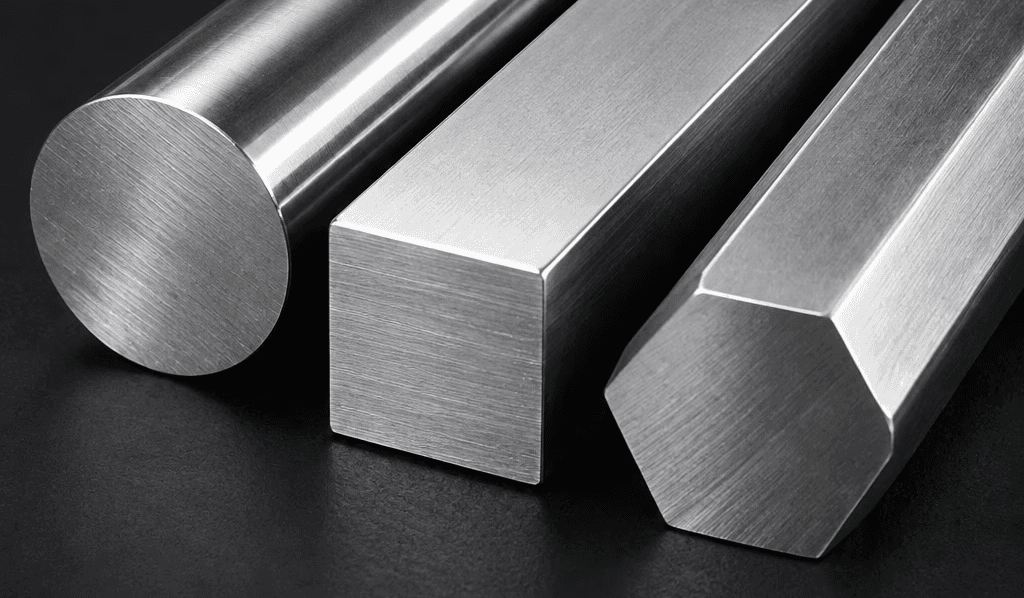
A bright bar is a steel bar that has been cold finished, by cold drawing, turning or grinding, to give it an accurate size, a smooth bright surface and better straightness than the hot rolled bar it started as. Bright bars are used wherever a part is machined, fitted or assembled: shafts, pins, fasteners, automotive components and machine parts.
This guide covers how bright bars are made, the main types, the grades you will see on a drawing and why cold finishing is worth paying for.
How is a bright bar made?
Every bright bar starts as a hot rolled bar, sometimes called a black bar because of the dark scale on its surface. That scale and the loose size of a hot rolled bar are what cold finishing removes.
At SS Engineering Works, the process runs in five stages: the surface scale is removed by shot blasting or pickling; the bar is pulled through a hardened die at room temperature, which reduces its diameter to a precise size; it is straightened; cut to length; and inspected for size, straightness and surface before dispatch.
What are the types of bright bar?
Bright bars are grouped by the finishing process, because the process decides the size range, tolerance and surface you get.
Type | How it is made | Typical use |
|---|---|---|
Cold Drawn | Pulled through a die at room temperature | Most general engineering, smaller and medium diameters |
Turned or Peeled | Outer layer machined off on a lathe | Larger diameters, where surface defects must be fully removed |
Ground & Polished | Cold drawn or turned bar, then centreless ground | Tightest tolerances and finest surface, for precision fits |
Bright bars also come in different sections: round is the most common, with hexagonal, square and flat available for specific parts.
Which grades are used for bright bars?
Bright describes the finish, not the steel. The grade decides strength, machinability and whether the bar can be heat treated. These are the grades buyers ask for most often in India:
Grade | Type of steel | Common use |
|---|---|---|
EN 1A | Free cutting steel | High volume machined parts, where fast machining matters more than strength |
EN 8 | Medium carbon steel | Shafts, axles, pins, bolts and studs |
EN 9 | Higher carbon steel | Parts that need wear resistance |
EN 19 | Chromium molybdenum alloy steel | High strength shafts and heavily loaded components |
Why pay for cold finishing?
A bright bar costs more than a hot rolled bar of the same grade. The extra cost usually comes back in four ways.
Accuracy. A cold drawn bar holds its diameter within a tight tolerance class, such as h9 or h11, so less material has to be machined off, or none at all. Our guide to bright bar tolerance explains the classes.
Surface. No scale means less tool wear, fewer finishing operations and a part that can often be used as supplied.
Strength. Cold drawing work hardens the steel, raising its yield and tensile strength compared with the same grade hot rolled.
Straightness. Bright bars are straightened as part of the process, which matters on automatic lathes and long shafts.
Where are bright bars used?
Almost anywhere a steel part is machined or fitted: automotive shafts and pins, fasteners, pump and motor shafts, textile and agricultural machinery, hydraulic components, and general engineering.
Frequently asked questions
Is a bright bar the same as mild steel?
Not necessarily. Bright refers to the cold finished surface and size. A bright bar can be mild steel, medium carbon steel like EN 8, or an alloy steel like EN 19.
What is the difference between a bright bar and a black bar?
A black bar is hot rolled, with scale on the surface and a looser size. A bright bar has been cold finished to remove the scale and bring the size into a tight tolerance.
Which Indian standard covers bright bars?
Bright steel bars are covered by IS 9550. Your drawing or specification may also call up a grade standard such as IS 1570 or BS 970.
Can bright bars be heat treated?
Yes, if the grade allows it. Medium carbon and alloy grades such as EN 8 and EN 19 are commonly hardened and tempered after machining.
Need bright bars?
SS Engineering Works has made cold drawn bright bars in Sonipat since 1968. WhatsApp us at +91 70653 37337 with your grade, size and quantity, and we will confirm availability.